
Bring Your Own Generation Isn't the Solution: The Homer City Case Study
.png?resize=870x0)
As electricity demand rises across Pennsylvania, driven in part by the rapid growth of energy-hungry data centers, lawmakers and decisionmakers are calling for these data centers to “Bring Your Own Generation” (BYOG) to ensure that they add new electricity to the electric grid rather than driving up costs for everyone else.
While this may seem like a simple solution, the devil is in the details of what that generation looks like and how it impacts local residents.
For instance, here in Pennsylvania, developers have been pushing huge hyperscale data center proposals—often powered by dirty fracked gas.
Doubling down on costly, polluting fossil fuels means dirtier air, higher energy bills, a less resilient and diverse electric grid, and a deeper climate crisis.
PennFuture calls on our state leaders to embrace the Bring Your Own New Clean Energy (BYONCE) approach as the real solution for addressing energy affordability in new data center development.
Homer City: A Pennsylvania Case Study
Let’s take a closer look at a hyperscale data center project here in Pennsylvania. A 4.4-gigawatt (GW) gas-fired power plant is being built in Homer City,Indiana County, to fuel a massive AI data center campus. The entire site is 3,200 acres (roughly 5 square miles) and would require the construction of 5.8 miles of 30-inch pipeline to deliver gas to the power plant. This is 4x bigger than New York City’s Central Park. According to the plant owner, Homer City Redevelopment, LLC, this gas plant will have seven combined-cycle gas turbines, along with several simple-cycle turbines and other engines. This is what BYOG looks like for Pennsylvania: home to one of the largest fracked gas power plants in the nation.
Not lowering electricity bills
Pennsylvanians’ electricity bills are skyrocketing. Last summer, customers experienced up to a 10-12% increase in monthly bills, and just last month, customers in Indiana County saw another 11.88% increase. Adding more gas plants does not address this problem.
Gas prices are dependent on the whims of the global market; increasing demand for that gas only increases competition and prices. Fracking wells require very little human labor and provide few jobs, all while poisoning the local communities. Building a gas plant and a data center might offer job opportunities, but critics point out that the job creation likely consists of temporary construction work and specialized or remote jobs, none of which come with a guarantee that those jobs will go to the local labor force. Once completed, the average 1 GW gas-fired power plant employs 20-30 people full-time. Similarly, the average data center employs 20 individuals full-time.
BYOG will not protect ratepayers from rising energy prices caused by data centers. Instead, BYOG means expensive fracked gas plants, rising demand and the price of gas, localized air and water pollution, and negative impacts on human health. Tech companies building their own power plants to fuel their data centers will not successfully isolate other customers from rate hikes for two reasons:
- There is a chance that gas plants may be built, but the planned accompanying data center project may fail to materialize. This would make the gas plant a stranded asset, and ratepayers would end up paying the cost for it to connect to the grid in the end.
- These new gas-fired power plants will ultimately raise the price of gas for all customers simply by entering the market and increasing competition.
Increasing pollution
While generating electricity for the data center campus, the power plant would emit over 17 million tons of greenhouse gas emissions each year, along with other air pollutants, like ammonia and particulate matter. It’s well-documented that these pollutants are connected to respiratory illnesses, increased asthma rates, and lung cancer, especially concerning children and the elderly. The power plant, and the data center campus it will allegedly feed, could also consume large amounts of fresh water to cool the facility.
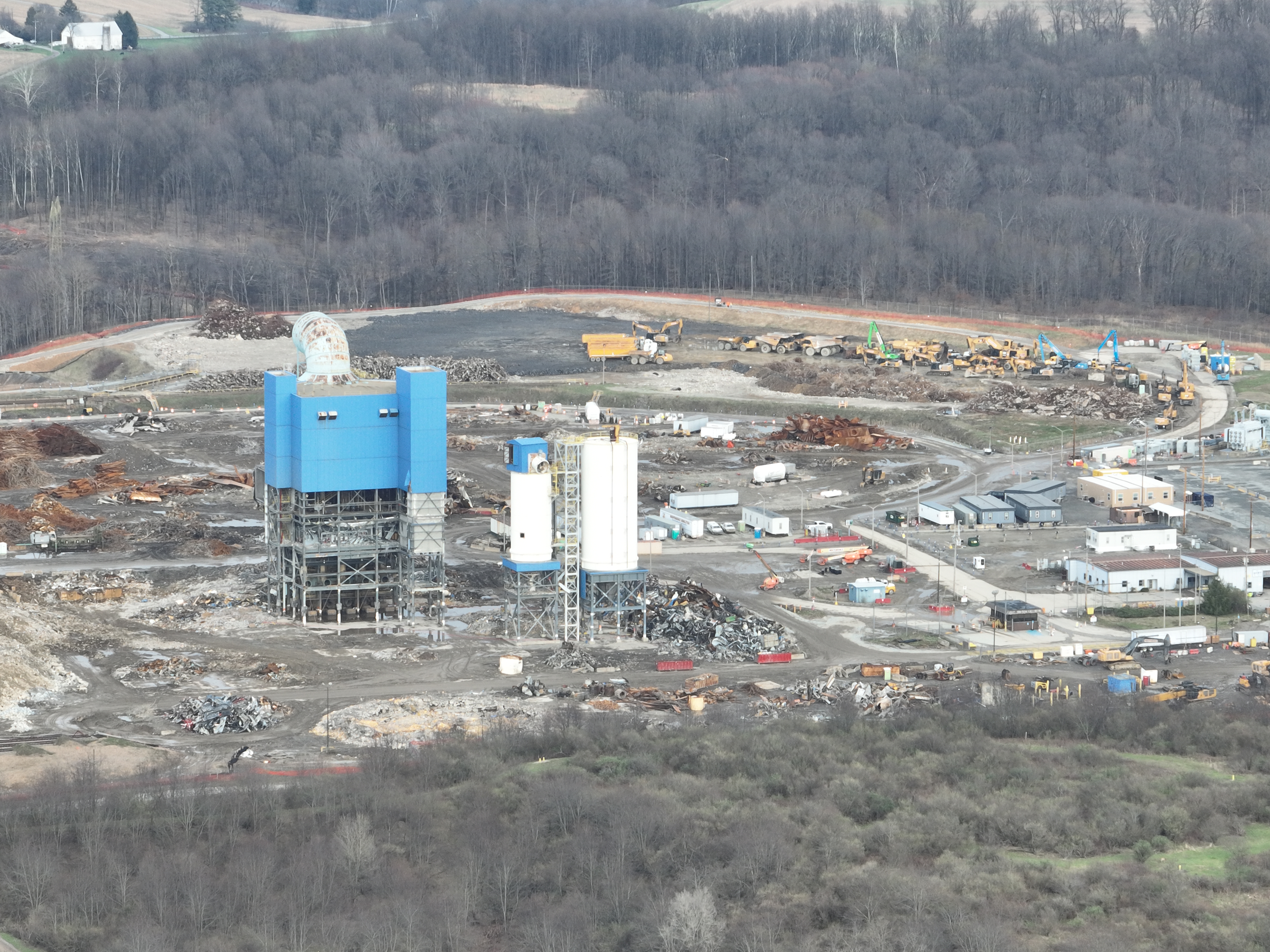
Homer City, Indiana County, PA. Photo credit: FracTracker Alliance, April 2026.
There is Another Way: BYONCE
Pennsylvanians are struggling under the weight of the overlapping energy affordability and climate crises. Bills are going up, and weather is getting more extreme. We cannot afford to continue this way.
It is possible to start addressing these crises—by enabling, promoting, and incentivizing renewable energy generation and energy storage. For the first time in history, solar energy generation outpaced coal nationally. Batteries are more affordable than ever and strengthen grid systems.
It does not make economic or environmental sense to continue incentivizing dirty, expensive energy, especially when electricity is needed now. A new gas plant takes five to seven years to build—and that’s without the current 5-year backlog on gas turbines. On the other hand, a utility-scale solar array can be built and connected in 1-2 years.
We need to build energy infrastructure in Pennsylvania that increases service and reliability while reducing costs and pollution. Renewable energy paired with battery storage is capable of just that; it is the fastest and cheapest way to add electricity supply to our grid and lower our electricity bills.
We have a duty to look beyond BYOG. We must insist on BYONCE—Bring Your Own New Clean Energy—as our future. We must make clear that we need clean energy to power Pennsylvania’s economy!
Pennsylvania’s leaders must be thoughtful and firmly place the health of our communities on equal footing with economic growth —they need to think about long-term sustainability and why cheap, fast-to-deploy renewables and battery storage should be a pivotal part of Pennsylvania’s long-term vision.
How You Can Take Action
Fortunately, we have seen some positive legislative movement on this front with the introduction of House Bill 1834, the Data Center Act. Sponsored by Rep. Matzie, this bill requires large data centers to source a significant share of their power from new, in-state clean energy & long-duration storage to meet their electricity demand. This bill also sets strong standards for cleaner, tightly controlled backup power at data centers.
This bill passed the state House and is currently stuck in the PA state Senate. You can take action here to let your legislators know you support this effort to put strong regulations on data centers.
PennFuture has called for a statewide moratorium—a pause—on data center development until state lawmakers can adopt strong policies that ensure data centers are sited properly, have regulated water use, and crucially, bring in new clean energy.
As we continue to fight for these strong data center regulations, check out our newly released white paper to learn more: Bring Your Own New Clean Energy: An Assessment of Generation of Strategies in the PJM Footprint.
-0001.png)