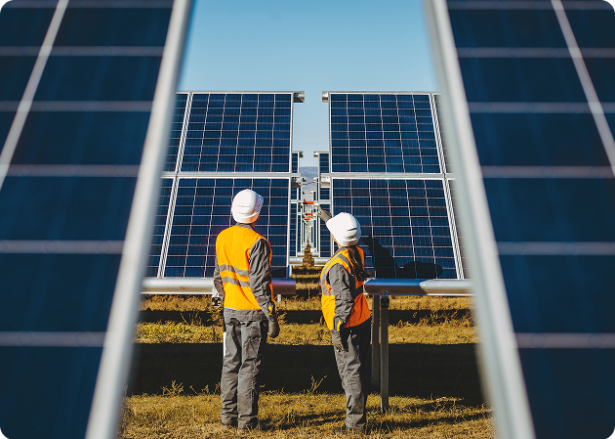
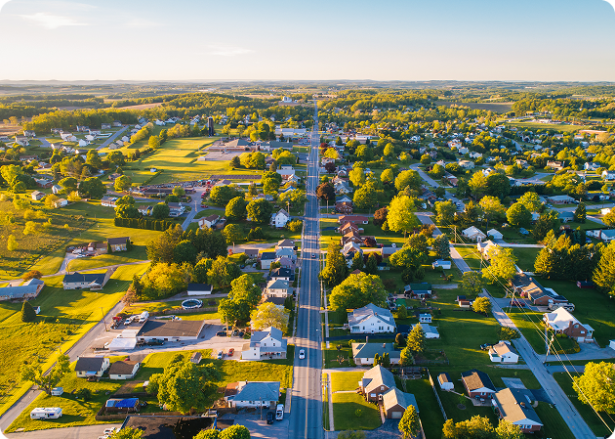
Pennsylvania’s clean energy workforce grew 10% from 2017-2020, 5x faster than state’s employment growth rate

Half of all freshwater flowing into the Bay comes from Pennsylvania by way of the Susquehanna and Potomac Rivers.
These river basins, covering around half the land area of Pennsylvania, are responsible for 40 percent of all nitrogen pollution, 20 percent of all phosphorus pollution, and a heavy load of sediment pollution.
Within the Susquehanna and Potomac River Basins, more than 15,000 miles of polluted streams are choked with excess nutrient and sediment pollution, impacting local fish populations such as Pennsylvania's trout and the Bay’s blue crabs and oysters as well as other aquatic life.
Dangerous levels of pollution add risks to recreational activities such as swimming and kayaking, while threatening drinking water supplies.
To address this, Pennsylvania is required to reduce its load of pollution into the Susquehanna and Potomac Rivers by 34 million pounds of nitrogen and 756,000 pounds of phosphorus by 2025.
So far, Pennsylvania falls significantly short on meeting its goals.
Restoring the rivers and streams that flow to the Chesapeake Bay requires widespread adoption of beneficial agricultural practices, riparian forested buffers, construction methods and stormwater infrastructure.
Currently, a bottom-up approach has mobilized coordination among local stakeholders and hundreds of rural, suburban and urban municipalities. But additional funding is needed to sustain the cost of new restoration and pollution-prevention programs.
An estimated annual investment of more than $521 million is necessary for Pennsylvania to achieve its Chesapeake Bay goals. As of 2019, less than $200 million of federal, state, and local resources are available to the cause.
PennFuture calls upon state officials to prioritize more ambitious, tangible Chesapeake Bay protections. The Pennsylvania Watershed Implementation Plan (WIP) fails to provide necessary funding, accountability and enforcement.
Read more of PennFuture’s take on the WIP.
We champion funding for best management practices that produce benefits for the Chesapeake Bay, local waterways and all stakeholders who benefit from protecting our local rivers and streams.
We engage in public outreach and education, advocacy, and litigation to improve and protect water resources and water quality across the Susquehanna River Basin.
We intervene in cases where necessary. For instance, we came to the defense of the Environmental Protection Agency (EPA) when the American Farm Bureau Federation challenged the Chesapeake Bay Total Maximum Daily Load (TMDL) pollution limits.
We work with Pennsylvania state agencies to watchdog progress of pollution-reduction measures, to advocate funding increases, and to monitor those who contribute pollution to ensure they are compliant with Clean Water Act and other environmental protections.
We serve as the state lead for the Choose Clean Water Coalition, harnessing the collective power of more than 250 groups to advocate for clean rivers and streams in all communities in the Chesapeake Bay region.
Currently, we are developing a report that will offer a pathway for Pennsylvania’s General Assembly to fully fund the Chesapeake Bay restoration efforts at the levels established in the Phase 3 Watershed Implementation Plan. Please stay tuned as we will notify our members and update this page once published.
Prior to the coronavirus pandemic, the clean energy economy employed more than twice as many workers as the state’s entire fossil fuel industry.
More than 75,000 Pennsylvania jobs are tied to clean energy. The industry’s job growth is five times faster than the state’s overall employment growth rate.
Rapidly transitioning to renewable energy would meanwhile help us avoid the most serious consequences of climate change. Phasing out coal and gas-fired power plants would improve air quality, disproportionately benefiting people of color and low-income communities.
Modest goals and meager financial incentives are holding back our potential.
Pennsylvania requires 18 percent of electricity production come from “alternative energy sources.” Several non-renewable electricity sources, many from outside the state, unfortunately count toward this goal.
The state’s Alternative Energy Portfolio Standard credits electricity producers as diverse as wood-powered biomass, municipal solid waste and landfill gas facilities.
More than any other source, the state program rewards combustion of toxic coal mining waste.
Solar generators receiving credits are mostly located outside the state. Solar produced in Maryland, North Carolina and Virginia accounted for 65% of the 2019 total.