
What the Heck is a Virtual Power Plant?

Think about teaming up with your neighbors and connecting with your community to save on energy costs. When you share energy resources and work together locally, you can help close the clean energy gap and lower your own expenses. Welcome to a new energy opportunity growing in popularity across the U.S. — virtual power plants!

THE PROBLEM: PENNSYLVANIANS ARE OVERPAYING FOR ENERGY
It’s no secret that energy bills are high right now. Pennsylvania homeowners are paying on average 20% more than they were just two years ago to power their homes, according to the state’s Independent Fiscal Office. The typical monthly electric bill increased from $213 in 2024 to $232 in 2025.
And energy bills are only projected to increase even more. One big reason? Data centers.
Data centers are driving up demand for electricity, so our power grid pays certain power plants more to be ready, and to build new supply. Currently, those higher costs usually end up in the supply charge on customers’ bills, so everyone pays the cost of high generation prices.
In addition to rising energy demand, our power grid is often strained by rising climate impacts including heat waves, cold snaps, and storms. Utilities have limited ways to respond to ensure there is enough power for everyone during peak energy demand, including:
- They can buy very expensive power from polluting “peaker” plants that sit idle most of the year.
- They can make rushed investments in utility poles, wires, and other infrastructure for a handful of peak demand hours.
- Or, they can tap into resources already in Pennsylvanians’ homes and businesses, avoiding new infrastructure costs that get passed on to customers’ energy bills.
That third option sounds good to us – let’s look into that!
THE SOLUTION: VIRTUAL POWER PLANTS
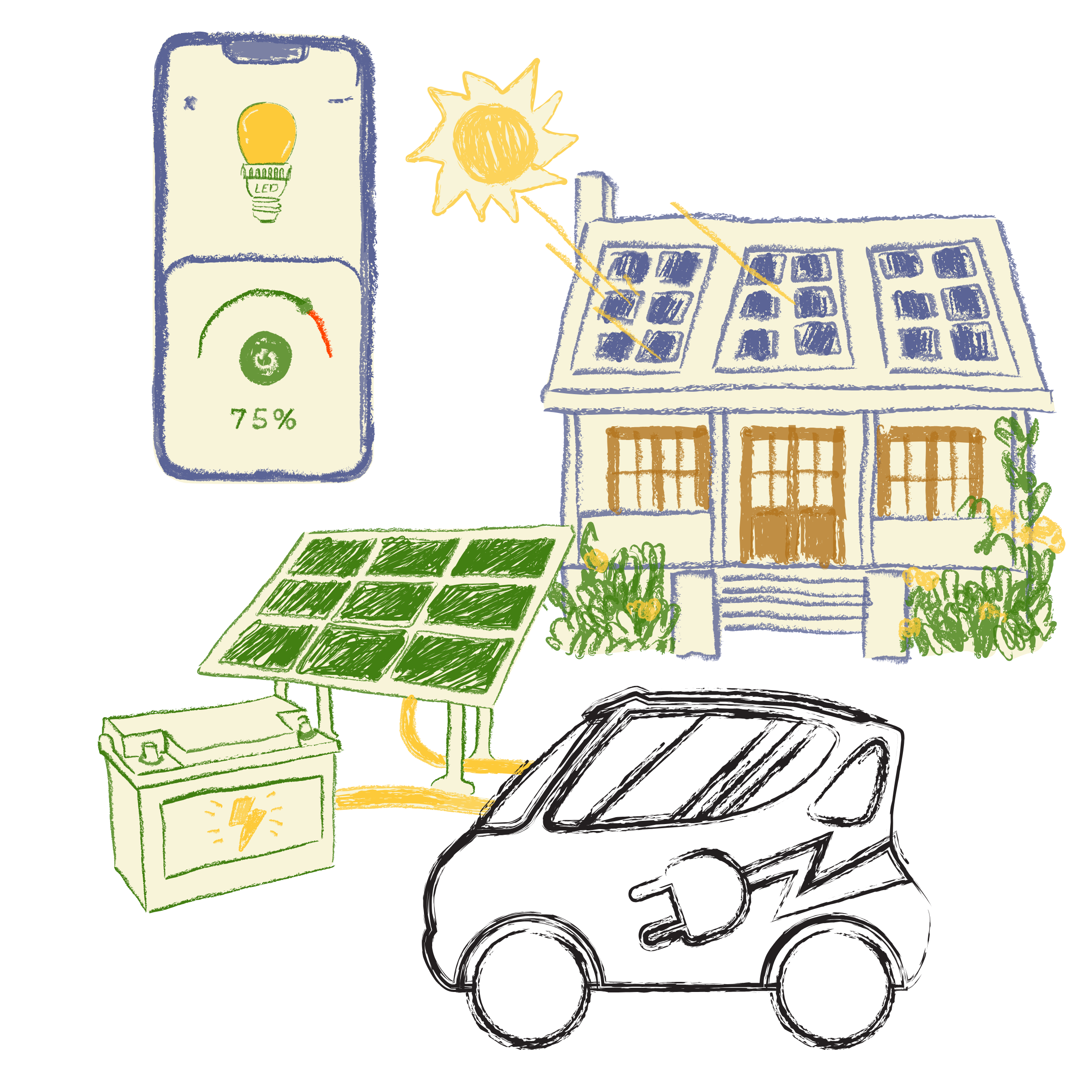
A virtual power plant (VPP) links together thousands of small, customer-owned devices: home batteries, smart thermostats, electric water heaters, rooftop solar paired with storage, and EV chargers. Together, they can act as a coordinated resource when the grid is stressed.
No single device is a “power plant.” But when many participate, the combined impact can be substantial. VPPs can lower demand when it is high and also supply additional electricity when it is needed most. This makes electric service more reliable and less expensive.
When these devices are aggregated and coordinated via software, they can provide many of the same energy services (capacity, energy, ancillary services) as a traditional power plant.
The U.S. Department of Energy calls VPPs among the fastest-to-deploy tools to strengthen reliability and resilience. Scaling them nationally to 80–160 gigawatts by 2030 could help meet rising demand while reducing costs.
Virtual power plants aren’t a far-off idea. Thirty-seven states and the District of Columbia already have at least one virtual power plant program for customers to take advantage of.
View this post on Instagram
HOW DO VIRTUAL POWER PLANTS WORK?
VPPs are run by utilities or by third-party aggregators, often through programs that customers voluntarily join.
Ultimately, it’s up to each utility on how to implement their VPP program.
Participants can join the VPP program in several ways by allowing it to:
- briefly adjust a thermostat by a degree
- shift water-heater timing,
- discharge a home battery during a peak event,
- or other cost-saving measures.
Participation is flexible: Choose how much of your energy use you want the VPP program to manage.
Participants get compensated, and because those peak hours are when electricity is most expensive, savings can also flow back to ALL customers through lower system costs.
Many programs apply a credit directly to your monthly electricity statement, while others issue direct bank deposits or checks.
ECONOMIC BENEFITS OF VIRTUAL POWER PLANTS
A new Brattle report finds that increasing the use of virtual power plants could cut projected household electricity bill increases by 57% over the next five years, after inflation.
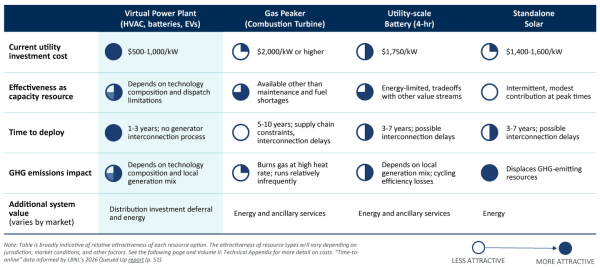
The report also found that distributed energy resources can avoid major power system costs. VPPs cost significantly less than gas peaker plants or utility-scale batteries, and broader studies point to over $600 billion in potential U.S. savings through 2050.
VPPs are among the fastest, cleanest, and least expensive forms of new capacity:
VIRTUAL POWER PLANTS COULD HELP MANAGE UNCERTAINTY AROUND FUTURE DATA CENTER DEMAND
Nobody really knows how much power the data center boom will need — and that’s putting utilities in a tough spot.
If they underinvest in power plants and the grid, economic growth and energy reliability will suffer. If utilities overinvest, Americans may pay for infrastructure nobody needs.
Meanwhile, virtual power plants offer a flexible way to meet data center demand, without overbuilding if that demand doesn’t materialize.
The Brattle report also examines a hypothetical nationwide scenario in which actual load growth falls 5% short of forecasts between now and 2030. In that scenario, overinvestment in power plants and grid infrastructure added about $84 billion in costs that will be paid by U.S. utility customers from 2030 to 2040. However, by expanding VPPs, the report finds those overbuilding costs were reduced by $33 billion, or roughly 40%.
With these potential savings in mind, many are looking to create community benefits for data center projects by sourcing energy from local homeowners through virtual power plants. Big Tech would pay homeowners to install battery backup, solar, and other home electrification upgrades, then pay them for the energy they provide to the data center. Virginia Governor Spanberger’s new executive order points in this direction, directing the state to steer data center investment into local energy projects like home batteries, heat pumps, and VPPs that lower household bills, expand access for low-and moderate-income families, and strengthen the grid.
This approach works as a community benefit because it gives residents near data centers a tangible return, adds grid capacity using resources already in homes, and avoids new infrastructure costs that get passed on to ratepayers. It’s popular, too: 76% of Virginia voters support requiring data center developers to fund improvements that cut nearby residents’ electricity bills by 20% or more.
HOW CAN WE GET VIRTUAL POWER PLANTS IN PENNSYLVANIA?
The good news — there is movement!
In the 2025-26 legislative session, House Bill 2264 was sponsored by Rep. Nate Davidson. This bill would require electric utilities to set up a virtual power plant program using energy resources already in homes and businesses.
The PA state House passed it on June 16, 2026, by a vote of 107 to 95. But it failed to move in the PA Senate.
Under the bill, the major electric distribution utilities would submit VPP proposals to the Public Utility Commission. HB 2264 also mandates enhanced incentives for low-income households and historically disadvantaged communities, ensuring the financial benefits of the modern energy economy are accessible to everyone.
Overall, this bill would create a way for customers to enroll devices and be compensated for helping the grid. It would save customers more than $480 million per year.
Although this bill is unlikely to pass this legislative session, we look forward to prioritizing virtual power plants in the new year so that Pennsylvanians can have a more reliable grid, lower energy bills, and a healthier environment!